Hector Blunt’s attempt to shield Flora
The Murder of Roger AckroydHector Blunt’s attempt to shield Flora turns her confession of theft into a test of loyalty: once Flora admits taking money from Roger Ackroyd, Blunt claims that the money was his and that Flora never touched it. Poirot sees through the fabrication, but praises the impulse behind it; Blunt’s false testimony reveals his readiness to place himself between Flora and disgrace.
The Confession He Tries to Counter
During Poirot’s gathering, Flora acknowledges that she took the money and calls herself a thief. Her confession is not limited to the act: she describes a life of wanting things, scheming, lying, cheating, accumulating bills, and promising repayment. She also links her understanding of Ralph Paton to their shared weakness. The admission makes clear why Blunt’s intervention matters: Flora has exposed her own wrongdoing, and the room has heard her accept responsibility.
Blunt’s False Account
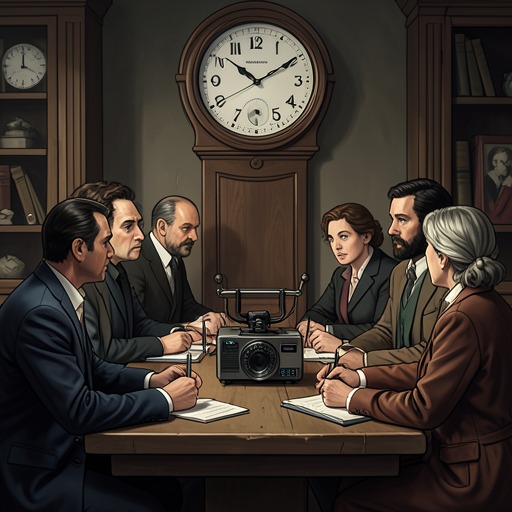
After the Inspector responds uncertainly to Flora’s admission, Blunt steps forward and addresses Inspector Raglan. He says Roger gave the money to him for a special purpose, insists Flora never touched it, and claims that she is lying to shield Captain Paton. He offers to enter the witness box and swear to this account. The declaration is therefore more than a denial made in private: Blunt presents himself as willing to sustain the falsehood under oath.
He then makes a jerky bow and abruptly leaves the room. Poirot follows him into the hall and stops him. The movement gives the attempted protection a brief, physical aftermath: Blunt has made his offer and withdrawn, while Poirot refuses to let the lie stand unexamined.
Poirot’s Recognition
Poirot tells Blunt directly that he is not deceived. He affirms that Flora really did take the money, but calls Blunt’s invented explanation well imagined and commends him as quick to think and act. Blunt answers coldly that he is not anxious for Poirot’s opinion and again tries to pass on. Poirot is not offended; he lays a hand on Blunt’s arm to detain him.
The exchange separates the factual question from the moral one. Poirot does not allow Blunt’s account to erase Flora’s confession, yet he recognizes the protective purpose of the lie. Blunt’s attempt cannot change who took the money, but it shows what he is willing to risk for Flora: an apparently credible story and even sworn testimony.
Significance
The episode places two responses to guilt side by side. Flora’s confession ends the nightmare of keeping her theft concealed; Blunt, by contrast, immediately offers to take the burden onto himself. His intervention is not successful as deception—Poirot identifies it at once—but it gives the exposure of Flora’s theft a counterpoint of loyalty and self-sacrifice. In a case where people repeatedly conceal damaging truths, Blunt’s falsehood is unusual in its direction: he lies not to protect himself, but to shield someone else.